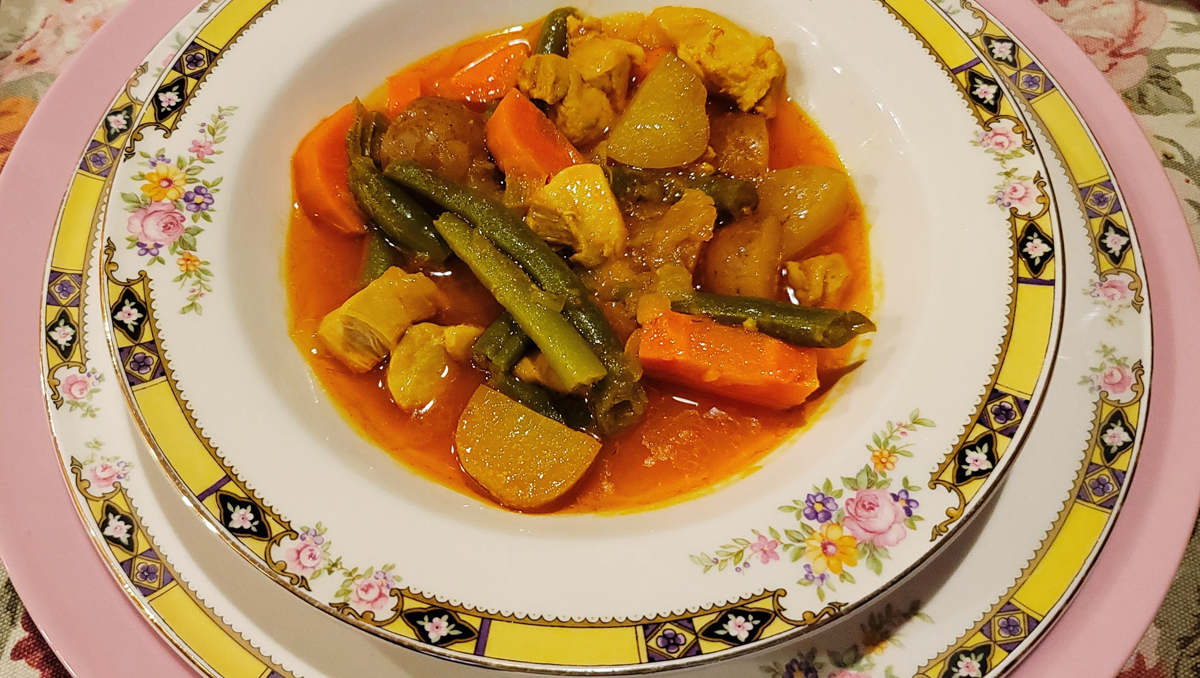

Simply delicious! You will find yourself making this again and again. OUT-OF-THIS-WORLD FLAVOR!!!
Naz Deravian writes in The New York Times:
Lifting spirits with a medley of flavors and vibrant hues worthy of a spring garden, khorak-e loobia sabz is equal parts cozy and comforting, and also perfect for entertaining without much effort. Green beans, loobia sabz in Persian, are the seasonal star of the dish with carrots and potatoes filling it out. This version uses chicken, but you can also use stewing meat, or omit the meat altogether and serve as a vegetarian dish. Saffron, the flag bearer of many Iranian dishes, is added at the end for its distinct perfume, earthy and floral notes, and rich pop of color, but you can also leave it out without the need to substitute with any other spices. Serve khorak-e loobia sabz with rice or bread; salad-e Shirazi and mast-o khiar.
Ingredients
Yield: 6 servings
- 1 pinch saffron threads (optional), see Tip
- ¼ cup olive oil, plus more as needed
- 1 large yellow onion, finely chopped
- Kosher salt, such as Diamond Crystal
- 1 teaspoon ground turmeric
- ¼ teaspoon black pepper
- 1 ½ pounds boneless, skinless chicken thighs (about 5), cut into 1 ½-inch pieces
- 2 tablespoons tomato paste
- 1 pound green beans, trimmed and sliced into 3-inch-long pieces
- 2 large carrots, halved lengthwise and sliced into ½-inch-thick half-moons
- 1 large Yukon Gold potato, peeled and cut into 1- to 1 ½-inch cubes (I used a good handful of little potatoes quartered.)
- 1 (3-inch) cinnamon stick
- 3 tablespoons lemon juice (from 1 lemon), plus more as needed
Preparation
- Prepare the saffron water, if using (see Tip): In a kettle or a saucepan, bring 2 tablespoons of water to a boil, then let stand for 2 minutes to allow the temperature to drop slightly while you grind the saffron. Using a mortar and pestle, grind the saffron to a fine powder (you will have a scant ¼ teaspoon). Add the hot water, gently stir, cover and let steep until ready to use.
- In a large (12-inch) deep pan with a lid, or large (5-quart) Dutch oven, heat the oil over medium. Add the onion and cook, stirring occasionally, until golden, 10 to 12 minutes. Sprinkle with a little salt, add the turmeric and pepper, and stir until fragrant, about 30 seconds more.
- Add the chicken, season with 2 teaspoons of salt, and cook, stirring occasionally, until the chicken is no longer pink, 3 to 5 minutes. Add the tomato paste, and cook, stirring frequently, until the tomato paste is no longer raw and infuses its color into the oil, about 2 minutes. Drizzle in a little more oil if the pan is too dry.
- Add the green beans, carrots, potatoes and cinnamon stick, and season with 1 teaspoon salt. Cook, stirring occasionally, until the vegetables just come out of their raw state, about 3 minutes. Add 1 cup of water. Increase to medium-high, bring to a boil, cover, adjust heat to low and gently simmer, stirring occasionally, until the chicken is tender and the vegetables are fork-tender but not mushy, 30 to 35 minutes.
- Remove the cinnamon stick from the pot, add the lemon juice and saffron water, stir and simmer, with the pot partially covered, until the flavors come to life, about 15 minutes. While the stew simmers, taste for salt and lemon juice and adjust as needed.
Tip: If a mortar and pestle isn’t available, finely crush the saffron using your fingertips or mince finely with a knife. If your mortar and pestle easily absorbs stains, transfer the crushed saffron to a small bowl before adding the water.
I apologize for the poor photo. You must make this.